Notcross, Georgia — a parody

NotcrossA Place Imagined
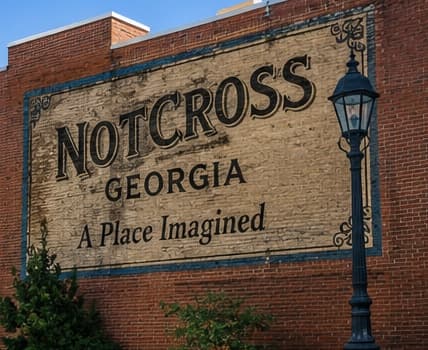
A painted brick wall sign reading Notcross, Georgia — A Place Imagined

History of Notcross

A railroad town, four decades of planning, one broken projector, and everything that followed.

Notcross was chartered in 1889 around a freight depot on the rail line north of Atlanta. For its first century it was, like a great many Georgia towns, defined by what came through it. What defines it now is a Tuesday morning in March 2025.

  1. 1889 – 2025

    Old Notcross

    A Place to Imagine

    Four decades of studies, committees, visioning sessions, property acquisition and plans for future plans.

  2. March 4, 2025

    The Great Notcross Epiphany

    The morning the projector broke

    Unable to hold a planning meeting, city staff attempted implementation instead.

  3. 2025 – present

    New Notcross

    A Place Imagined

    The things residents spent a generation imagining began, in several documented cases, to appear.

Old Notcross

The Age of Imagination

For most of its modern history, Notcross operated on a single, quietly effective principle: when a good idea appeared, it was studied until it left.

Every administration pledged vibrancy, walkability, economic development, downtown revitalization, public-private partnership, and something called placemaking, which nobody could define but everyone agreed sounded promising.

The City accumulated property. It commissioned studies. It held workshops, hosted visioning sessions, and — on more than one occasion — developed plans for future plans. Businesses arrived with ideas, enthusiasm and money, and gradually discovered that Notcross was less a place to do business than a place to discuss the possibility of someday doing business.

Parking remained a cherished local mystery. Everyone agreed there was not enough of it. Everyone agreed something should be done. Nothing was done.

Old Notcross

Two Cautionary Landmarks

Historians of the period point to two events that came to define the era.

The first was the acquisition of the historic Woman's Club, a beloved building purchased for roughly $1 million without any particularly urgent plan for what to do with it. It became the perfect emblem of the municipal method of the time: acquire first, imagine later, implement never.

The second was South End. South End was supposed to be different — a serious proposal, from a serious developer, with money, drawings, and the dangerous expectation that something might actually get built. It entered the civic process in the usual way: excitement, concern, meetings, revisions, more concern, more meetings, updated renderings, additional discussion. The developer eventually underwent what local historians now describe as the Full Notcross Experience, and departed.

The Great Notcross Epiphany

The Great Notcross Epiphany

On the morning of Tuesday, March 4, 2025, city leaders arrived at City Hall and discovered a situation without precedent in the modern record.

Every conference room had been booked. Every consultant on the approved vendor list was unavailable. The projector in the Council Chamber had failed overnight. And no one, after a determined search, could locate the current version of the strategic plan.

For the first time in living memory, the City of Notcross was unable to hold a planning meeting.

In the silence that followed, a staff member — whose identity the City has chosen not to publicize — asked a question that would reshape the community: "What if we just fixed something?"

The room's first instinct was procedural. One attendee asked whether that would require a feasibility study. Another asked whether a committee was already studying the matter of fixing things. Minutes were not taken. But against every institutional instinct available to it, the City tried something it had never seriously attempted.

It said yes.

New Notcross

New Notcross

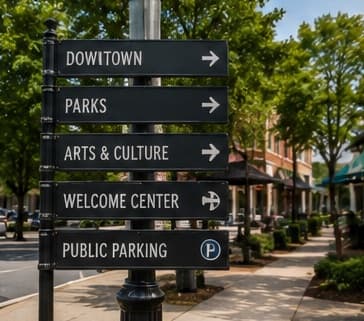
A business asked for help opening. The City said yes. A developer proposed a project, and the City asked how it could help. Someone suggested building parking, and — rather than commissioning a parking study — the City built parking.

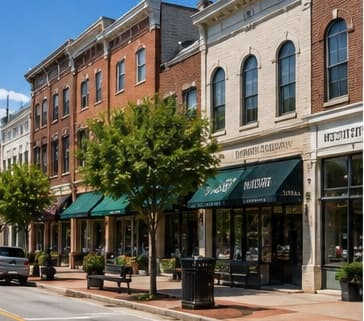
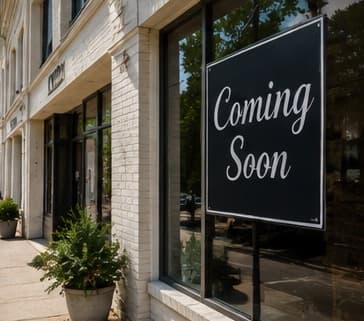
The Woman's Club was assigned an actual purpose. Vacant storefronts were aggressively recruited rather than passively regretted. City-owned property was returned to productive use. Permitting became fast. Rules became predictable. Businesses stopped being treated as intruders and started being treated as customers.

And then something stranger happened. Things started happening.

Today Notcross is proud to be A Place Imagined — a community where the future described in four decades of renderings has, in a growing number of documented instances, arrived.

From the Old Notcross Archive

Press releases issued before March 2025, retained in full. They are the clearest surviving record of how the City communicated during the Age of Imagination.

Browse the full archive